1 — The Lipizzaner Epidemic
I would soon go on in my career to witness more horrific things. Right then, what I saw sickened me.
The tiny foal in the container bin remained as graceful in death as it might have been had it lived. Its gangly legs seemed spread in a canter. Its coat looked freshly groomed. But it was slick with remnants of its mother’s afterbirth, and flies swarmed its broken eyes.
I gagged at the smell and turned away.
“Just a sec,” my wife said. “I want to take another photo.”
I was supposed to do double duty as reporter and photographer on my first big story for the Associated Press. Christine came along after I asked her to take the pictures so I could concentrate on the reporting. She was a third-year medical student back then.
My thought, though, as she leaned deep into the container with the camera to one eye was, You would have made a better reporter than I ever will be.
After more than a year with the AP, I was still a newbie. Fresh to the Vienna office from Geneva, I was more used to reporting on the UN trade organizations housed in the staid halls of the Palais des Nations than real-life action.
But action was what I craved.
So, I jumped at the offer of a transfer to the Austrian capital, back then the AP’s reporting and editing hub for communist Eastern Europe and the Western Balkans.
Budapest now is an eventless three-hour drive from Vienna, and Prague not much more. They seemed much further away back in 1982, when guards with a finger on the trigger manned heavy machine guns on platforms overseeing border crossings.
Few Westerners needed to drive past them, and fewer wanted to. Yet it often took half a day to cross. Document checks could take hours.
Going in, cars were hoisted and their seats removed in searches for a long list of forbidden goods as disparate as Western newspapers and Lewis. Coming out, the hunt was for smuggled Hungarian salami, Becherovka spirits, and defectors strapped to undercarriages.
Some got through. But escapes from behind the Iron Curtain were few.
I was one of them.
My parents fled Hungary to Canada with my brother and me during the failed 1956 Hungarian anti-Soviet revolution. Now, I could go back as part of my job, and not only to Budapest.
Our West German bureau covered East Germany. Tirana was off limits, its borders shut as tightly as its Stalinist dictator could make them. Budapest, Prague, Bucharest, and Sofia beckoned, however, along with what was then Yugoslavia.
It was an adventure few others in the West had the chance to experience, and I was getting paid for it.
But my first big assignment was closer to home.
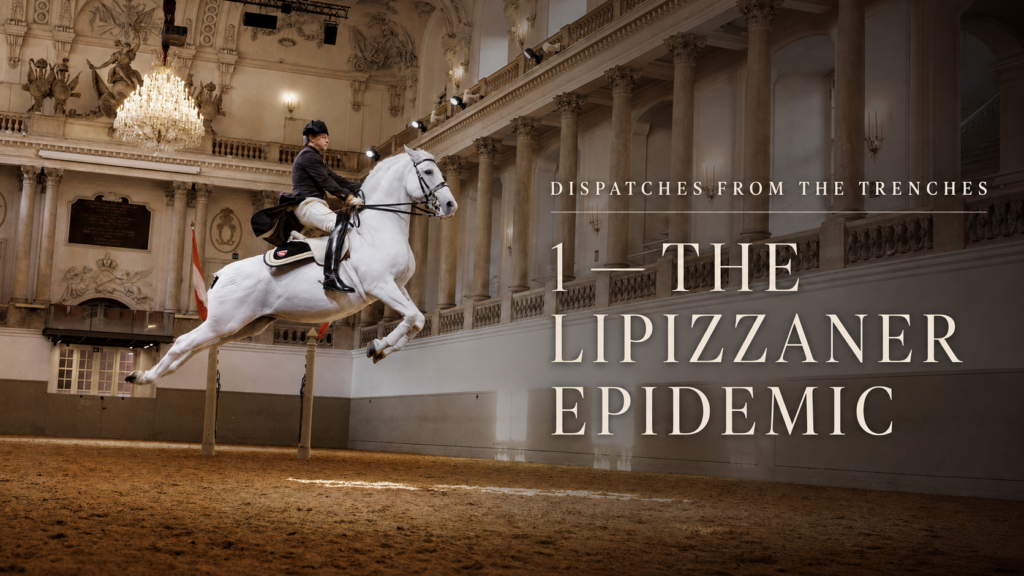
Then, as now, Austria’s Lipizzaners were a major tourist draw: the renowned dancing white horses of Vienna’s Spanish Riding School.
Thus, when mares and foals started dying, it was big news by itself even beyond Austria’s borders. What made it even bigger was what was killing them.
Herpes.
The genital herpes scare of the early 1980s would soon be eclipsed by world panic over AIDS. But this was before the realization that AIDS was deadly not only for gay men but potentially for anyone engaging in unprotected sex.
Today, popping an acyclovir tablet shrinks herpes in hours. Back then, Time magazine’s famous 1982 cover called it “The New Sexual Plague,” and major news outlets reported on it as the disease of the decade.
As news of the deaths spread, offers of help started pouring in to the Lipizzaner stud farm from as far as breeders in Kentucky, and international pharma companies offered free doses of interferon and other experimental drugs.
Dozens of horses died nonetheless, and by the time I returned from a two-day reporting trip, I had seen enough of their cadavers to document them without blanching.
I wrote and sent my story.
The deaths stopped soon after, as inexplicably as they had begun. Thinking back now, 44 years later, I believe it was due to divine intervention, because they ended shortly after Austria’s Franciscan nuns began praying for the horses’ welfare.
By then, Nate Polowetzky, AP’s crusty foreign editor, had sent me dozens of newspaper clippings giving my story prominent play. They now share room in the cardboard boxes holding other mementos of my work.
But it was his letter I prized the most.
No more than a typed sentence on crinkly onionskin paper (lightweight for airmail), they were almost always a blast for an assignment not done well. This one was praise, and my colleagues didn’t believe it until I showed it around.
Still, I wondered how thoroughly he’d read through my article. After all, it was about Lipizzaners. But he had his own name for them.
“Fantastic job on the Lipanzzers, George!”
You can find more of my writing and reporting here:
Instagram | TikTok | Muck Rack | Thoughts | Substack