Our common vocabulary contains words that are rarely heard to the west of us: words such as sovereignty, independence, freedom, God, homeland, family, work, honor, security, and common sense.”
That was Viktor Orbán back in 2018, as he described the shared ideology of
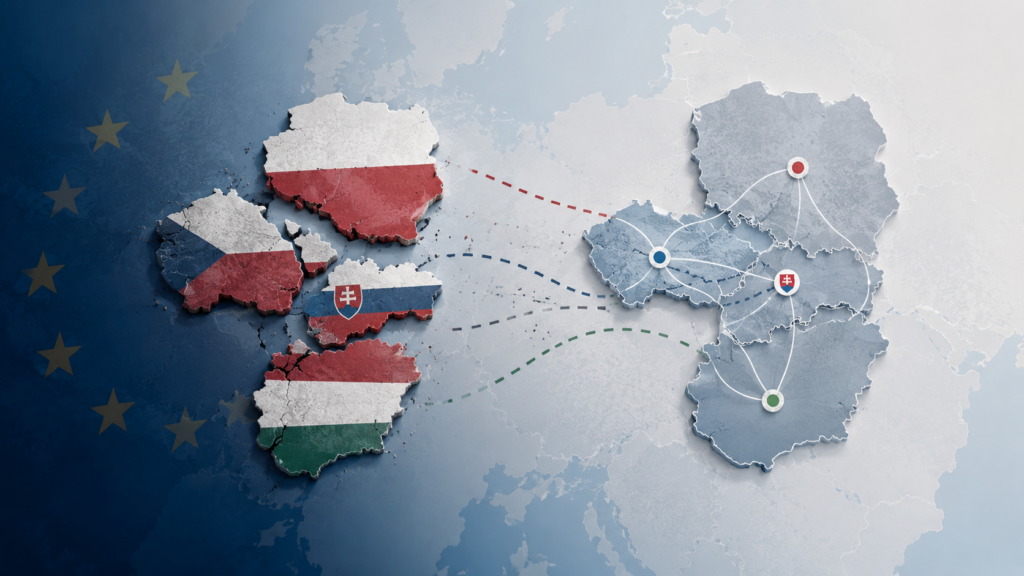
Hungary, Poland, the Czech Republic, and Slovakia. As the Visegrad Four, they were a bloc within a bloc, the tail that often wagged the EU dog, projecting themselves as defenders of national sovereignty, cultural conservatism, and resistance to Brussels’ authority. Their united opposition to EU refugee-quota plans forced the EU to retreat from compulsory relocation and helped shift the entire migration debate toward border control.
Now, the four countries’ leaders are preparing to meet on the group’s future at a time when little remains common among them beyond a shared geography.
Slovak Premier Robert Fico remains the only Eurosceptic in office. Orbán, the founder of “illiberal democracy,” was replaced last month by the pro-EU Peter Magyar. Donald Tusk, a fellow Europhile, has set policy in Warsaw since late 2023.
Andrej Babiš. of the Czech Republic, often aligned rhetorically with the group’s anti-migration, anti-Brussels posture. But he’s a pragmatist rather than a true Brussels critic. As such, he is unlikely to stand with a weakened Fico to oppose the EU’s security and economic policies.
So is the Visegrad Four dead? Or will it rise from its nationalist-populist ashes in its original iteration as a regional group focused on practical cooperation?
Before becoming a right-wing political force, the V4 functioned mainly as a technical coordination platform, harmonizing trade rules, improving cross-border transport links, modernizing waterway corridors, and presenting joint positions on EU funding. The stars are aligning for the bloc to again focus on just that as a practical, Central European coordination forum rather than a geopolitical counterproject.
If so, the EU will only benefit. European Council meetings will be quieter with Orbán gone. More importantly, the EU can move ahead on long-term financial support, joint defense procurement, and other military projects for Ukraine
A pro-EU Hungary, a firmly mainstream Poland, and a transactional Czech Republic would turn the V4 from a political veto machine back into what it was formed to be: a regional partner that contributes input to EU priorities rather than fighting them.
Just in time, too. With one bellicose Great Power fighting a war at its borders, another turned from partner to rival, and the victim of economic warfare by the third, the EU needs to focus on external threats instead of battling an enemy from within.
You can find more of my writing and reporting here:
Instagram | TikTok | Muck Rack | Thoughts | Substack