President Trump has not only dissed the 2015 deal with Iran that put strict limits on Tehran’s weapons‑capable nuclear enrichment program for 15 years. He hated it enough to cancel it three years later. So, nine years on, why is he considering the likelihood of accepting something similar but much weaker?
The truth is that he may not have much of a choice, as he scales back Washington’s goals in the face of growing public opposition to an inflation‑stoking war and disenchantment with the broken promise to keep the US out of foreign conflict.
Early rhetoric from senior officials flirted with regime‑change language, and Trump repeatedly threatened to destroy Iran’s nuclear infrastructure.
And now?
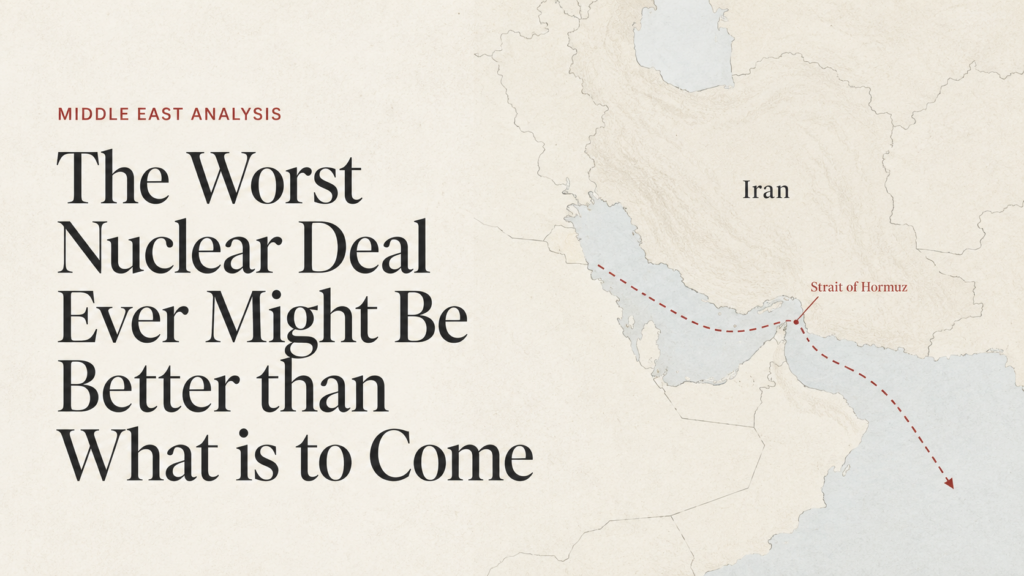
Just about anything to get Iran to reopen the Strait of Hormuz. Including a nuclear agreement that the Trump administration is selling as a “freeze‑for‑freeze” — a halt in U.S. escalation if Iran agrees to pause its enrichment activities. But for how long? Fifteen years? Ten? One?
And then what?
Trump condemned the Obama administration’s JCPOA agreement as capitulation. The “freeze for freeze” concept gets the opposite treatment — framed by some hawks as tough‑minded realism. Strip away the bombast, though, and what the US administration is willing to settle for, at least for now, is a deal that rests not on the JCPOA’s internationally monitored compliance but on the assumption that recent pressure will be enough to secure a pause.
How long is an open question. But probably long enough to give Tehran time to rebuild its drone capabilities and proxy activity — both of which fed into Washington’s decision to strike Tehran in the first place.
The goal posts are moved daily. The New York Times cited an unnamed Iranian official Sunday as saying there was agreement on a preliminary deal that would fully reopen the Strait and see Iran dispose of its stock of highly enriched uranium. But he said the fate of Iran’s nuclear program — which US officials have said the war was meant to stop — was left open for future talks.
The deal under Obama was meant to keep Tehran honest by outlining broader and longer-term economic rewards if it continues to honor the JCPOA. At this writing, the Americans are said to be willing to offer sanctions relief in small doses in exchange for a temporary nuclear freeze. A pretty modest goal after weeks of war.
The JCPOA embedded the IAEA and its inspectors so deeply into Iran’s program that Iran either honored the deal or left it. But a pause for who knows how long and without a rigorous commitment from Tehran to allow inspectors to return with the same mandate they had under the JCPOA would give Tehran a huge advantage. After all, they conducted secret enrichment for decades before their program was revealed.
Like Obama, Trump is trying to buy time. But the JCPOA bought more than a decade of commitment from Iran to rein in its nuclear program. With disruptions in the Strait of Hormuz increasingly hurting Trump at home and abroad and the unspoken threat that it can be imposed again at any time, he may have to settle for much less, both in terms of length and scope.
Get ready for some interesting posts on Truth Social, if so.
You can find more of my writing and reporting here:
Instagram | TikTok | Muck Rack | Thoughts